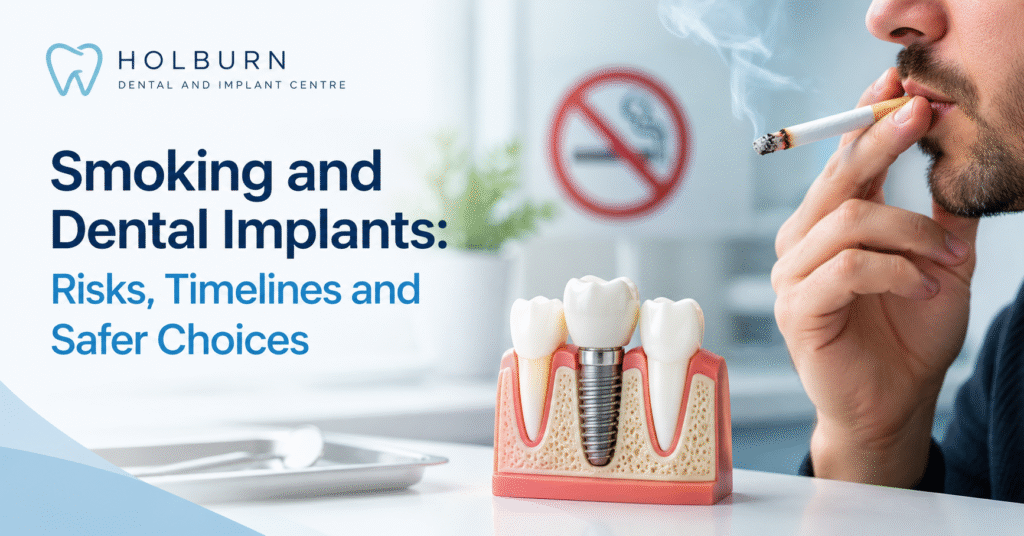
Do you smoke and want to replace a missing tooth? You may worry that implants are not an option. The good news is that many smokers can still have them. However, smoking does raise the risks. In this guide, we explain why, when to stop, and what safer choices you can make. That way, you can plan your dental implant treatment with confidence.
Can Smokers Have Dental Implants?
Yes, in many cases they can. Smoking does not rule you out on its own. Instead, your dentist looks at your whole mouth and your general health.
First, they check your gums and your jawbone. Next, they ask how much you smoke and for how long. Then they explain your own risk. Light smokers who can stop for a while often do well. On the other hand, heavy smokers with gum disease face a higher risk.
So the honest answer is this: you can often have implants, but quitting gives you the best chance of success.
Why Smoking Affects Healing
An implant is a small titanium post. During surgery, your dentist places it in your jawbone. Over the next few months, the bone grows around it and holds it tight.
Smoking gets in the way of this healing in several ways:
- Less blood flow. Nicotine narrows your blood vessels. As a result, less oxygen reaches your gums and bone.
- Weaker defences. Smoke lowers your body’s ability to fight germs. So infections start more easily.
- Heat and chemicals. Hot smoke irritates the wound. It can also slow down new bone growth.
- Dry mouth. Smoking reduces saliva. Saliva normally helps to keep your mouth clean.
Because of this, research shows that smokers lose implants more often than non-smokers. Some studies suggest the risk is around twice as high.
When Should You Stop Smoking?
Timing matters a great deal. Your dentist will give you advice that suits you. Still, most follow a simple plan:
| Stage | What to do |
|---|---|
| Before surgery | Stop at least two weeks before. Earlier is even better. |
| Day of surgery | Do not smoke at all. |
| First week after | This is the most important time. Avoid all smoking. |
| First two months | Try to stay smoke-free while the bone heals. |
| Long term | Stopping for good protects your implant for years. |
In short, the longer you stay smoke-free, the better your implant heals. Many patients use their treatment as the push they need to quit for good.
Alcohol can also slow healing. For more advice, read our guide on alcohol after implant surgery.
What About Vaping and Nicotine Pouches?
Many people ask if vaping is a safer choice. Vapes contain fewer harmful chemicals than cigarettes. However, most still contain nicotine. Nicotine still narrows your blood vessels. Therefore, it can still slow healing.
Vaping also dries out your mouth. In addition, sucking on a vape creates pressure that may disturb the wound in the first few days.
Nicotine pouches and gum skip the smoke. Even so, they still deliver nicotine. They also sit right next to your gums.
So what is the safest option? Ideally, avoid all nicotine before and after surgery. If you cannot, talk to your dentist. Together, you can make a plan that lowers your risk.
The Long-Term Risk: Peri-Implantitis
Even after your implant heals, smoking still matters. Smokers have a higher risk of peri-implantitis. This is an infection of the gum and bone around an implant. It works a lot like gum disease. Over time, it can loosen the implant.
Early on, you may notice:
- Red, puffy, or bleeding gums around the implant
- Bad breath or a bad taste
- Gums that pull back and show more of the implant
Fortunately, early treatment works well. To learn more, read about the signs of peri-implantitis. Also, keep up with daily cleaning and regular hygiene visits.
Getting Help to Quit
Quitting is hard. But you don’t have to do it alone. Free NHS help is available across Scotland through Quit Your Way Scotland. They offer advice, support and stop-smoking aids.
Here are some simple tips that help many people:
- Pick a quit date, ideally a few weeks before surgery.
- Tell friends and family so they can support you.
- Avoid your usual triggers, such as coffee breaks or nights out.
- Ask your pharmacist about patches or other aids.
- Remind yourself why you started. A healthy smile is a great reward.
Plan Your Implant With Confidence
Smoking does not have to stand between you and a new smile. With the right plan, many smokers enjoy strong, lasting implants.
At Holburn Dental and Implant Centre, we look at your health honestly and help you lower your risk at every step. To find out more about implant surgery and your options, book an implant consultation today.
Also Read:https://holburndentalclinic.co.uk/snap-on-dentures-explained/