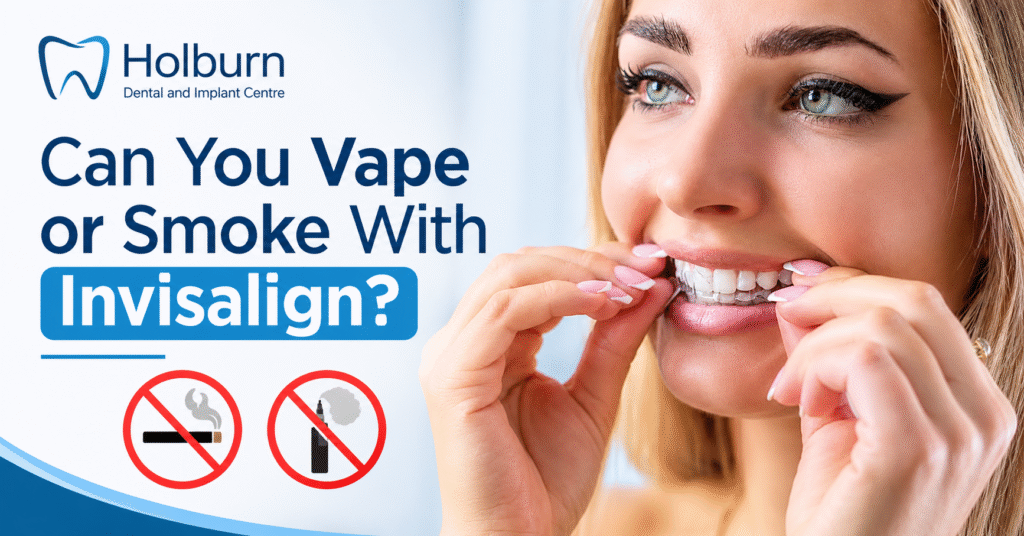
No. You should not smoke or vape with Invisalign aligners in your mouth. Take your aligners out first, rinse or brush your teeth, then put them back in. Smoke and vapour can stain aligners, trap chemicals against your teeth and gums, and cut into the 20–22 hours a day you need to wear them.Many people who smoke or vape ask if they can still have Invisalign. The short answer is yes. But you must never smoke or vape with your aligners in. This guide explains why, what can go wrong, and the simple routine to follow. It is written for adults having Invisalign in Aberdeen and nearby areas.
What Does “Smoking or Vaping With Invisalign” Mean?
It means smoking cigarettes, using an e-cigarette, or using any nicotine product while you are having Invisalign treatment. Invisalign uses clear, removable aligners that slowly move your teeth. If you are having Invisalign in Aberdeen, your dentist will ask you to take the aligners out before you smoke or vape.
How Smoking and Vaping Affect Invisalign
Invisalign aligners fit tightly over your teeth. Anything that gets under them stays there. This is why smoke and vapour cause more problems with aligners in.
What happens if you smoke with aligners in
- Staining: Tar and nicotine turn clear aligners yellow or brown. These stains are often hard to remove.
- Trapped chemicals: Smoke residue sits between the aligner and your teeth for hours.
- Heat: Hot smoke may soften or warp the thin plastic. A warped aligner may not move teeth as planned.
- Smell: The plastic can hold on to the smell of smoke.
What happens if you vape with aligners in
- Less tar, not risk-free: Vapes do not produce tar. But vapour still contains nicotine, flavourings, and other chemicals.
- Discolouration: Some e-liquids, especially coloured or sweet ones, can tint the aligners.
- Dry mouth: Vaping can reduce saliva. Saliva helps protect teeth from decay. Aligners already limit saliva flow over the teeth.
- Gum irritation: Vapour residue held against the gums may cause soreness or inflammation.
Why it matters for your treatment
- Wear time: Invisalign usually works best when aligners are worn 20–22 hours a day. Every smoking or vaping break takes time away from this.
- Gum health: Smoking is a well-known risk factor for gum disease. Healthy gums and bone support teeth while they move.
- Appearance: Stained aligners are no longer discreet. You may need replacement aligners sooner.
- Healing and comfort: Smoking reduces blood flow to the gums. This can make gums slower to settle if they become sore.
Smoking vs Vaping With Invisalign: Quick Comparison
| Factor | Smoking | Vaping |
| Stains aligners | Yes – often heavily | Possible – depends on the e-liquid |
| Tar | Yes | No |
| Nicotine | Yes | Usually yes |
| Dries the mouth | Yes | Yes |
| Safe with aligners in? | No | No |
| Uses up wear time? | Yes | Yes – frequent short breaks add up |
How to Smoke or Vape Safely During Invisalign: Step-by-Step
If you are not ready to quit, follow this routine every time.
- Take your aligners out. Use clean hands.
- Put them in their case. Do not wrap them in a tissue – they are easy to throw away by mistake.
- Smoke or vape. Keep the break as short as you can.
- Rinse your mouth with water. Brush your teeth if you can.
- Rinse your aligners in cool water. Never use hot water, as it can warp them.
- Put your aligners back in straight away.
- Keep track of your daily wear time. Aim for 20–22 hours.
- Tell your dentist how often you smoke or vape. They can check your gums and adjust advice if needed.
Key Points to Remember
- Never smoke or vape with your aligners in.
- Cool, plain water is the only thing you should drink with aligners in.
- Frequent breaks add up. Ten 15-minute breaks is 2.5 hours of lost wear time.
- Clean aligners daily with a soft brush and cool water.
- Nicotine pouches, snus and nicotine gum: take your aligners out first.
- Stained or warped aligners? Contact your dentist. Do not try to fix them yourself.
- Invisalign can be a good time to cut down. You already have to stop and remove your aligners.
- Free stop-smoking help is available in Aberdeen through NHS Scotland’s Quit Your Way service.
Frequently Asked Questions
Can I vape with Invisalign in?
No. Take your aligners out before vaping. Vapour can discolour the aligners and trap chemicals against your teeth and gums.
Can I smoke with Invisalign aligners in?
No. Smoke stains aligners and may warp them with heat. Always remove them first and rinse your mouth before putting them back.
Is vaping better than smoking with Invisalign?
Vaping has no tar, so it usually stains less. But it still dries the mouth and can irritate gums. The same rule applies: aligners out first.
Can smoking slow down Invisalign treatment?
It can if it reduces your wear time or harms your gums. Missing wear hours is the most common reason treatment takes longer than planned.
How long should I wait after smoking to put my aligners back in?
There is no set waiting time. Rinse your mouth or brush your teeth first, then put them straight back in.
Will vaping stain my Invisalign attachments?
Attachments are tooth-coloured filling material. Like natural teeth, they can pick up surface stains over time from smoking or vaping.
Can I use nicotine pouches or nicotine gum with Invisalign?
Yes, but only with your aligners out. Pouches and gum can stick to or stain the aligners.
Can I get Invisalign in Aberdeen if I smoke?
Yes. Smoking does not rule you out. Your dentist will check your gum health first and explain how to protect your results.
How do I clean my aligners after smoke or vapour exposure?
Brush them gently with a soft toothbrush and cool water. Ask your dentist which cleaning product suits your aligners.
Thinking About Invisalign in Aberdeen?
If you smoke or vape, you can still have Invisalign. The key is an honest conversation before you start. At Holburn Dental and Implant Centre, Invisalign is a private treatment. Your dentist will check your teeth and gums, talk through your habits, and explain what to expect. Results vary from person to person.
About the Author
Dr Mahmoud Abboud is a qualified dental professional with extensive experience in general and emergency dentistry, including tooth extractions, restorative treatments, and patient-focused care. He has a strong interest in managing dental pain, infection control, and complex cases such as fractured teeth and root remnants.