Dental implants look and feel like natural teeth. However, they still need daily care to stay healthy. Plaque can build up around them, just as it does around your own teeth. So, a good cleaning routine really matters. In this guide, we share a simple daily plan you can follow at home.
Why Cleaning Around Implants Matters
An implant cannot decay like a natural tooth. Even so, the gums and bone around it can still get sick. If plaque stays around an implant, it can cause swelling and bleeding. Dentists call this early-stage peri-implant mucositis.
Over time, it can get worse. Then, it may attack the bone that holds your implant in place. Dentists call this stage peri-implantitis. In some cases, the implant can work loose. The good news is that a simple daily routine helps prevent this.
The Tools You Will Need
First, gather a few easy tools. You can buy most of them from a chemist or supermarket.
- A soft toothbrush, either manual or electric
- A low-abrasive fluoride toothpaste
- Interdental brushes in the right sizes
- Implant floss or super floss
- A water flosser, if you like
- An alcohol-free mouthwash
Ask your dentist or hygienist which sizes and products suit your mouth best.
Your Morning Routine
Step 1: Brush Gently
Start by brushing your teeth for two minutes. Tilt your brush towards the gum line. Then, use small, gentle circles. Pay extra attention to the area where your implant crown meets the gum. Plaque likes to hide there.
Step 2: Clean Between Your Teeth
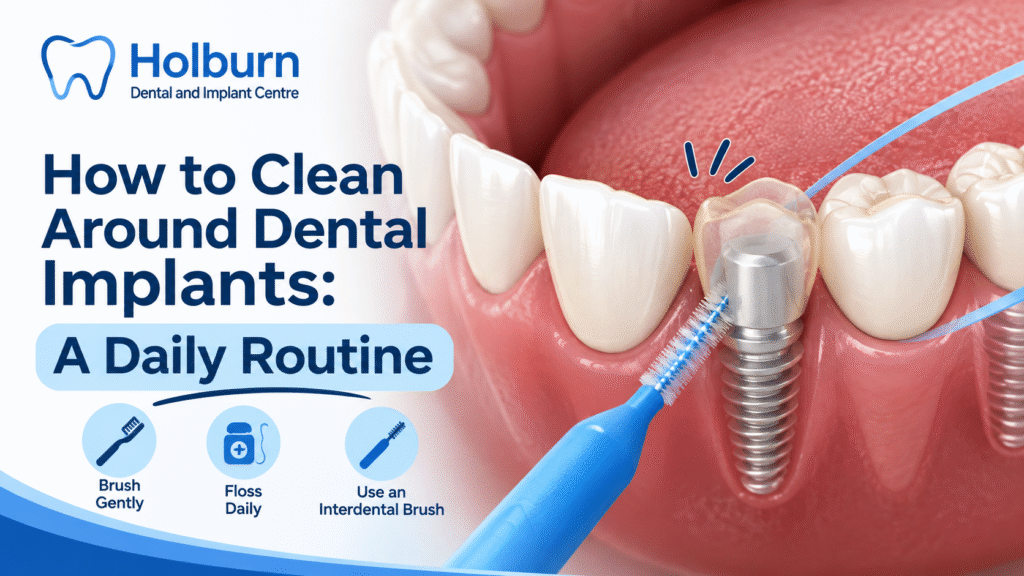
Next, use an interdental brush. Slide it gently into the gap beside your implant. Move it back and forth a few times. Afterwards, rinse the brush and repeat for each gap. Don’t force it. If it feels tight, try a smaller size.
Your Evening Routine
Step 1: Brush Again
At night, brush your teeth the same way. In fact, this clean matters most. During sleep, your mouth makes less saliva. As a result, germs can grow more easily.
Step 2: Floss Around the Implant
Then, use implant floss or super floss. These have a thick, spongy section. Thread the floss around the base of your implant. Next, wrap it into a “C” shape and slide it gently up and down. This removes plaque that your brush can miss.
Step 3: Use a Water Flosser or Mouthwash
Finally, you can use a water flosser. It sprays a thin jet of water between your teeth and around your implant. Many people find it easy and quick. Alternatively, rinse with an alcohol-free mouthwash. Your dentist can suggest one.
Tips for Implant Bridges and Dentures
Some people have several implants that hold a bridge or denture. In that case, food can collect underneath. Therefore, clean under the bridge every day. A water flosser or super floss works well here. If you have a removable denture, take it out and clean it each night. Also, brush the implant posts gently.
Habits That Protect Your Implants
Your daily routine works best alongside healthy habits:
- Stop smoking, as it harms your gums and slows healing.
- Cut down on sugary snacks.
- Avoid chewing ice or hard sweets.
- Wear a night guard if you grind your teeth.
- Visit your dentist and hygienist regularly.
Signs You Should See Your Dentist
Watch out for these warning signs:
- Gums that bleed when you clean
- Red or swollen gums around the implant
- A bad taste or bad breath that won’t go away
- An implant or crown that feels loose
If you notice any of these, book an appointment with your dentist soon. Early care usually makes a big difference.
Frequently Asked Questions
Can I use an electric toothbrush on implants?
Yes. A soft-headed electric toothbrush works well. Just avoid pressing too hard.
Should I use special toothpaste for implants?
Choose a low-abrasive fluoride toothpaste. Avoid whitening or gritty pastes, as they can scratch the crown.
How often should I see the hygienist?
Most people visit every three to six months. Your dentist will tell you what suits you.
Is it normal for my gums to bleed?
No. Bleeding often signals early gum problems. So, tell your dentist straight away.
Can I use normal floss around implants?
You can, but implant floss or super floss often works better. Ask your hygienist to show you how.
Implant Care at Holburn Dental and Implant Centre
At Holburn Dental and Implant Centre, we help patients in Aberdeen care for their implants for years to come. First, we show you the right tools and techniques. Then, we check your implants at regular visits. Book an appointment with our friendly team today, and keep your smile healthy and strong.
Related Article:https://holburndentalclinic.co.uk/smoking-and-dental-implants/